
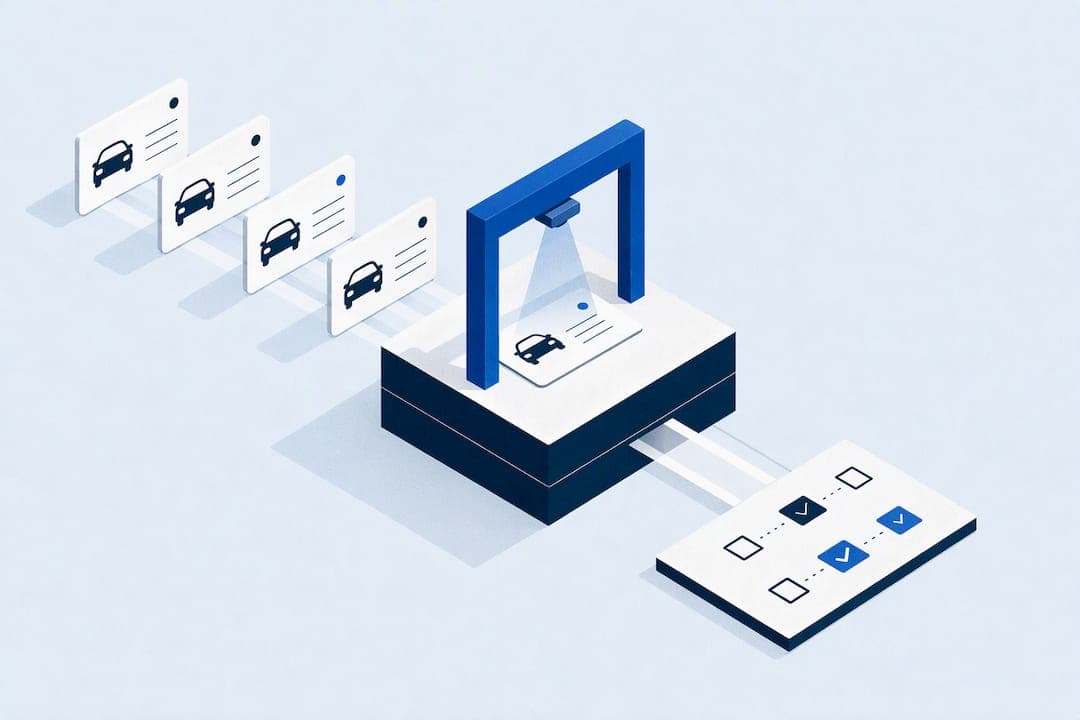
License plate recognition (LPR) automates permit and payment verification so enforcement teams can check far more vehicles per shift than manual patrols allow. The technology reads plates through cameras and matching software, but recognition accuracy varies by site conditions, which means every deployment still needs governance rules and a human verification step before a citation goes out.
TL;DR:
- Accurate license plate recognition requires proper camera placement, lighting, and maintenance, as real-world accuracy can be substantially lower than vendor demos.
- Enforcement programs must implement strict policies on data retention, human verification, and audit logging to ensure legal compliance and public trust.
- The choice of hardware — mobile, fixed, or handheld — depends on property size, flow predictability, and coverage needs, with placement quality being critical.
- Integration with permit, payment, and citation systems is essential for efficiency, and reconciliation tests should be performed regularly to catch mismatches early.
- A unified enforcement platform simplifies oversight, enforces verification workflows, and supports multi-property management, making scaling more reliable.
Table of Contents
- How LPR Parking Enforcement Actually Works
- Where LPR Delivers Real Operational Value
- Policy, Security, and Workflow Prerequisites Before You Launch
- Choosing Between Mobile, Fixed, and Handheld Deployments
- Connecting LPR to Permit, Payment, and Citation Systems
- Budgeting the Real Cost of an LPR Program
- Best Practices That Prevent Costly Enforcement Mistakes
- How a Unified Platform Keeps LPR Data Under Control
- What Managers Should Do Before Scaling LPR
- Run LPR Enforcement Through One Connected System
- Sources
- FAQ
How LPR Parking Enforcement Actually Works
LPR systems follow a simple pipeline: a camera captures an image of the plate, optical character recognition (OCR) software converts that image into text, and a matching engine checks the result against a permit, payment, or violation database before triggering an action like a citation or an alert. Each read typically comes packaged with metadata that supports later audits and disputes.
- GPS coordinates pin down exactly where the vehicle was captured.
- Timestamp records the precise moment of the read.
- Contextual photo captures the full vehicle, not just the plate, for visual confirmation.
Mobile units mounted on patrol vehicles cover more ground per shift, while fixed cameras at gates or entry and exit lanes deliver more consistent lighting and angle conditions. Handheld readers fill gaps in tight or pedestrian-heavy areas. Accuracy in all three setups depends heavily on camera angle, lighting, plate condition, and traffic speed, which is why field results vary so widely between properties.
Where LPR Delivers Real Operational Value
The clearest payoff is coverage. An officer scanning plates automatically can check far more vehicles in a shift than one relying on manual lookups, and unmatched plates surface instantly for follow-up instead of getting missed. That speed also makes virtual permits practical: instead of issuing and reconciling physical hangtags or decals, the system matches a plate directly against a digital permit record, cutting a layer of administrative work.
- Faster patrols mean more of a property or district gets checked in the same time window.
- Virtual permits remove the need to print, distribute, and track physical passes.
- Dwell time and occupancy data collected during LPR passes can inform staffing and space planning.
A university-run LPR field study found that well-placed cameras in controlled proof-of-concept testing reached read accuracy up to 96% for dwell-time and occupancy analytics, though pedestrian occlusion and unusual plate designs still caused misses. That gap between best-case and real-world performance is exactly why pilots matter before full rollout.
Policy, Security, and Workflow Prerequisites Before You Launch
Before any camera goes live, a handful of decisions need to be locked in writing, as shown by real-world examples like parking operations in Sopot Centrum. Skipping this step is the most common reason LPR programs run into legal or public trust problems later.
- Set data retention windows and define exactly who inside the organization can query stored reads.
- Require audit logging so every query and every enforcement action tied to an LPR read has a traceable record.
- Verify vendor compliance evidence, including SOC 2 Type II reports and PCI-DSS documentation for any vendor touching payment data.
- Mandate human verification before a citation is issued, with periodic QA sampling to catch pattern errors.
- Write RFP language covering trial periods, recalibration commitments, ongoing maintenance, and clear ownership of the data collected.
Municipal policy documents from Eugene and Sacramento both build retention limits, role-based access, and mandatory human review directly into their published LPR policies. Procurement teams evaluating vendors for violation management should also look at how Philadelphia's RFP for its parking violation system frames compliance requirements, since it spells out SOC 2 Type II and PCI-DSS expectations in plain procurement language.
Pro Tip: Build the "verified by" field into your citation workflow itself, not as a side note in a policy PDF, so every enforcement action has an auditable human signature attached.
Choosing Between Mobile, Fixed, and Handheld Deployments
The right hardware mix depends on the property type and how much ground needs covering. Mobile units on patrol vehicles suit large lots, campuses, or multi-block districts where officers move constantly. Fixed cameras at gated entries or garage exits work best where vehicle flow is predictable and lighting can be controlled. Handhelds cover small or irregular areas that vehicles cannot easily reach.
- Mobile deployments trade some accuracy for far greater square-footage coverage per shift.
- Fixed cameras deliver more consistent reads but only at the specific point they are mounted.
- Temporary trailers or handhelds work well for short pilots or seasonal enforcement before committing to permanent hardware.
Placement matters as much as the hardware choice: consistent lighting, a clear line of sight, and a mounting height that avoids glare all affect read rates far more than brand or model.
Connecting LPR to Permit, Payment, and Citation Systems
An LPR read is only useful once it talks to the systems that actually run enforcement. That means clean integration points between the camera feed, the permit database, pay-by-plate transactions, citation issuance, and reporting dashboards.
- Permit database checks confirm whether a plate matches an active resident, guest, or vendor permit.
- Pay-by-plate reconciliation verifies that a parked vehicle has an active paid session.
- Citation issuance should pull directly from verified reads rather than a separate manual entry step.
- Reporting feeds need to reflect the same data enforcement officers see in the field, not a delayed export.
Before going live, run reconciliation tests that compare a batch of LPR reads against known permit records to catch mismatches early. Virtual permits simplify this considerably: there are no hangtags to physically reconcile, since the permit record itself is the source of truth.
Budgeting the Real Cost of an LPR Program
Sticker price on cameras is the smallest part of total cost of ownership. Hardware and installation are one-time expenses, but software licensing, hosting, and integration work with existing permit or payment systems run continuously.
- Hardware and installation cover cameras, mounting, and initial network setup.
- Software licensing and hosting fees recur monthly or annually depending on the vendor's model.
- Recalibration and data storage add ongoing costs that grow as camera counts and retention windows increase.
- Staffing for verification is often the most overlooked line item, since every read still needs a human check before enforcement action.
Storage and support costs in particular tend to be underestimated when procurement teams focus only on the upfront hardware quote.
Best Practices That Prevent Costly Enforcement Mistakes
The properties that get the most out of LPR treat it as a tool that flags candidates for enforcement, not a system that issues citations on its own. Human verification before ticketing catches occlusions, damaged plates, and edge cases that automated matching misses.
- Run periodic accuracy audits comparing system flags against manual review outcomes.
- Publish retention and access policies publicly and bake the same terms into vendor contracts.
- Plan for seasonal recalibration, since lighting changes and physical obstructions like bike racks or temporary loading zones degrade read rates over time.
Field evaluations of LPR technology found capture rates in tested segments ran between roughly 64% and 68%, with recognition accuracy climbing into the 70% to 75% range only after recalibration. That is a meaningful gap from vendor demo conditions, and it is the clearest argument for budgeting recalibration into the program from day one rather than treating it as an optional add-on.
Pro Tip: Schedule recalibration checks at the same cadence as daylight saving time changes and major seasonal shifts, since lighting angle is one of the biggest hidden drivers of read accuracy drift.

How a Unified Platform Keeps LPR Data Under Control
Running LPR well means keeping permit records, violation history, payments, and audit trails in one place instead of stitched across separate tools. MyParkingMgr's parking enforcement software centers on exactly that: a single record system where an LPR read can be checked against permit data, verified by staff, and logged with a traceable audit trail. The software supports various deployment models to help operators match governance and IT requirements to how their organization actually runs. Workflow customization features can require human sign-off before any citation is finalized.

What Managers Should Do Before Scaling LPR
Start small. Pilot on one lot or one patrol route, track read accuracy and appeal rates for a few weeks, and only expand once the numbers hold up. Lock down retention, access, and verification policy decisions before the first camera goes live, not after a dispute forces the question. Define your success metrics and reporting cadence up front so the pilot actually tells you something.
Run LPR Enforcement Through One Connected System
Most parking operators piece together separate tools for permits, citations, payments, and reporting, then try to bolt LPR reads on top.  MyParkingMgr replaces that patchwork with one platform where LPR-flagged reads, permit checks, and citation workflows share the same audit trail. Deployment flexibility across hosted SaaS, client-hosted, and white-label options means the setup matches how your organization already handles data governance, not the other way around.
| Capability | What it solves for LPR programs |
|---|---|
| Unified permit and violation records | Matches reads against a single source of truth instead of separate systems |
| Configurable verification workflows | Enforces human sign-off before citation issuance |
| Multi-property reporting | Tracks read accuracy and appeals across every site from one dashboard |
| Flexible deployment | Hosted, client-hosted, or white-label to fit existing IT and compliance needs |
Multi-property operators can see how the platform handles portfolio-wide oversight on the MyParkingMgr features page, and teams ready to scope a pilot can request a proposal directly.
Sources
- University of Maryland LPR technology evaluation report
- WPI LPR field study — dwell time and occupancy use cases
- City of Sacramento Automated License Plate Recognition policy
FAQ
What does LPR mean in parking?
LPR stands for license plate recognition, a technology that captures and reads vehicle plates using cameras and OCR software to check them against permit, payment, or violation records. It is also called automatic license plate recognition (ALPR) in many municipal policies and RFPs.
How can drivers avoid automatic license plate recognition?
There is no reliable or legal way to defeat LPR cameras, and altering a plate to block recognition is against the law in most jurisdictions. The practical approach for drivers is simply making sure permits, registrations, and payments stay current so a plate matches correctly on any read.
How much does an LPR system cost?
Total cost depends heavily on the number of cameras, deployment type, and integration needs, and varies by vendor and site. Operators should budget beyond the hardware price for software licensing, hosting, recalibration, data storage, and staff time for verifying reads before citations are issued.
How do I report illegal parking?
Reporting processes depend on the property or municipality, but most require contacting the property manager, HOA, or local parking enforcement office directly with the vehicle's location and plate number. Properties using an enforcement platform can route these reports directly into their violation workflow for faster follow-up.