
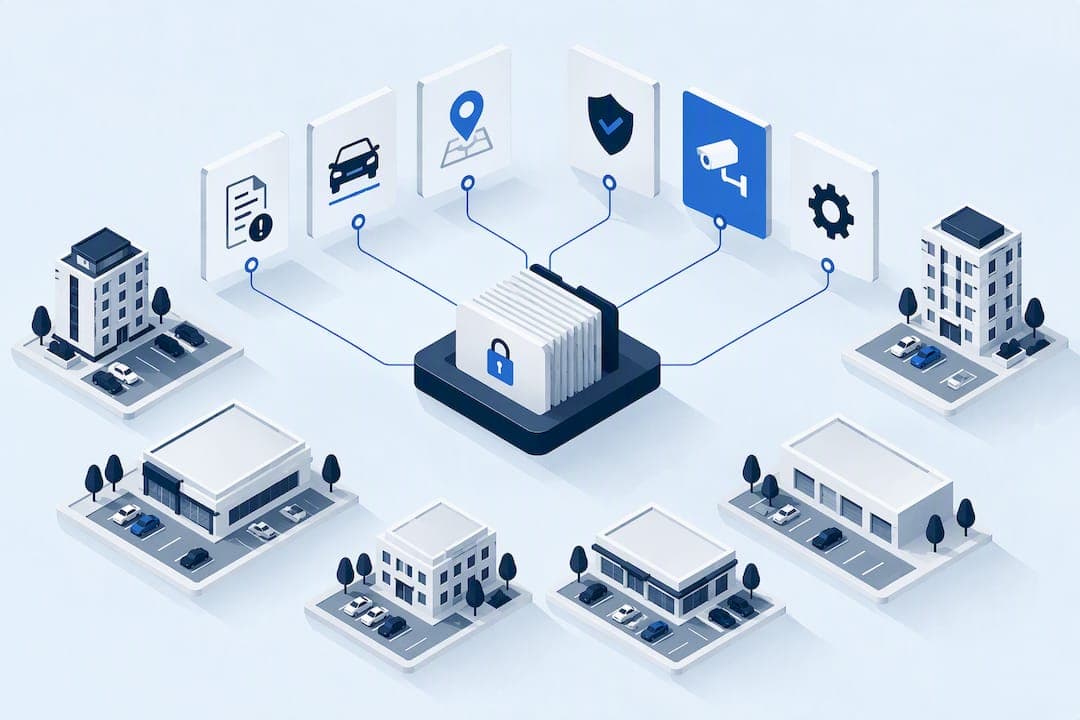
A parking violation letter is the documented notice a property or parking operator issues when a vehicle breaks posted rules, and it only protects you when it is timestamped, delivered through a traceable channel, and followed by a documented wait period before towing or fines. Skip any of those three elements and you are exposed if an owner disputes the notice later.
TL;DR:
- Proper legal notices require specific vehicle details, location, violation description, and a clear process for hearings, all issued within mandated timeframes.
- A defensible violation letter must include vehicle info, exact location, violation specifics, consequences, payment and appeal instructions, and metadata like issuing agent.
- Delivery proof via photos, certified mail, or read receipts is essential to withstand disputes, with consistent tracking of timestamps, GPS data, and case records.
- Enforcement must follow a fixed sequence: issue notice, wait legally required periods, then authorize towing, with immediate pause if a valid dispute arises.
- Automated workflows and a unified platform streamline case management, reduce legal risk, and enforce consistent procedures across multiple properties.
Table of Contents
- Legal and compliance essentials to check before issuing or towing
- Field-by-field checklist: what to include in every violation letter
- How to deliver notices and keep a defensible audit trail across properties
- Operational escalation: when to authorize towing, collect payments, and handle disputes
- How an integrated platform like MyParkingMgr implements these practices
- Operator perspective: why strict notice workflows save time and legal risk
- MyParkingMgr as the recommended solution for your violation workflow
- FAQ
- Sources
Legal and compliance essentials to check before issuing or towing
Before you issue a notice or call a tow vendor, confirm your process against the legal baseline. Statutes governing towing and vehicle notices commonly require specific vehicle details, a clear statement of the storage location, a defined notice window to the registered owner, and a path to a hearing. In North Carolina, for example, the law requires notice to the last known registered owner within 24 hours for in-state registrations and 72 hours for out-of-state ones, and that notice must include the vehicle description, storage location, alleged violation, and the procedure for requesting a hearing.

A posted sign at the entrance rarely satisfies these requirements on its own. Many statutes expect a notice tailored to the specific vehicle and incident, not a blanket warning. The same North Carolina statute also describes a pre-towing notice window, requiring a windshield posting at least seven days before towing when the owner is unknown, with an exception for vehicles that block traffic or threaten safety.
Before any notice moves to towing, build in an internal check:
- Confirm the violation matches a documented policy clause, not an informal rule.
- Verify the notice includes every statutory element for your jurisdiction.
- Confirm the required wait period has fully elapsed before escalation.
- Get sign-off from a designated approver before authorizing a tow.
Local rules vary, and the broader towing statute framework shows how much detail these laws can carry. Confirm your local requirements rather than assuming one jurisdiction's timeline applies everywhere.
Field-by-field checklist: what to include in every violation letter
A defensible notice is specific enough that no one, including a hearing officer, has to guess what happened. Build every letter around these fields:
- Location and identifiers: property name, lot or section, space number, and the exact date and time of the observation.
- Vehicle description: make, model, color, license plate, and a reference to the photo or evidence file tied to the case.
- Violation description: the specific policy or rule clause violated, plus a count of any prior notices for the same vehicle.
- Consequences: the fine amount, the condition that triggers towing, where a towed vehicle will be stored, and the retrieval process and fees.
- Resolution path: how to pay, how to appeal, and the deadline for each.
- Audit metadata: the issuing agent's name or ID and the approver who signed off, recorded for later reference.
Each field does double duty: it tells the vehicle owner exactly what happened and gives you a record that holds up if the case ever reaches a hearing or a dispute review.
Pro Tip: Keep your notice template fixed and change only the case-specific fields. Consistent language across every letter makes it easier to show a pattern of fair, uniform enforcement if a dispute goes to a hearing.
How to deliver notices and keep a defensible audit trail across properties
How you deliver a notice matters almost as much as what it says. Each channel carries a different strength as evidence:
- A photographed windshield notice proves the notice was physically placed, with a timestamp and often GPS data attached.
- Certified mail creates a delivery record tied to the registered owner's address.
- Portal or email delivery with read receipts confirms the notice reached an account, not just a mailbox.
- Recorded phone logs document verbal notice when a phone call is part of your process.
A notice with no delivery proof carries far less weight in a dispute or hearing than one backed by a photo, a timestamp, and a logged event. That gap is where automated workflows earn their keep: a configured wait-period counter prevents a tow from being authorized before the statutory window closes, even when staff are juggling several properties at once.
Whatever channel you use, capture the same supporting metadata every time: photo timestamps and GPS coordinates, the staff user ID who issued the notice, a unique case ID, a full event log of every status change, and a retention policy for how long the record stays on file. That consistency is what turns a single notice into a case file that holds together months later.
Operational escalation: when to authorize towing, collect payments, and handle disputes
Escalation should follow a fixed sequence, not a judgment call made under pressure:
- Issue the initial notice and start the wait-period clock required by your policy and local law.
- Send a follow-up notice if the violation continues past the first wait period, noting the prior notice count.
- Authorize towing only after the required notice window has fully elapsed, and send the tow vendor the vehicle description, violation history, and authorization record.
- Pause enforcement immediately if a valid appeal is filed before the tow, and document the outcome, approved or denied, in the case file.
- Record every payment, fine, and refund against the same case ID so accounting and audit records match exactly.
A tow vendor should never receive a verbal go-ahead alone; secure vehicle and fleet parking options, including for towed vehicles, are available through Island Park Storage's vehicle storage services. Attach the full evidence package, photos, notice history, and the approver's sign-off, so the vendor has the same documentation you would need if the owner challenges the tow.
How an integrated platform like MyParkingMgr implements these practices
We built parking violation management around the exact workflow above: a configurable notice template, automatic wait-period counters, and an audit log that timestamps every action from issuance to resolution. Photos and GPS data attach automatically through mobile enforcement, so evidence is tied to the case the moment it is captured, not reconstructed later from memory.
Towing coordination and payment capture run through the same record, which keeps refunds and charge reversals traceable for accounting. For operators managing several properties, multi-property reporting keeps enforcement consistent across every site. Deployment options may include hosted SaaS, client-hosted, or white-label, depending on organizational preferences.
Operator perspective: why strict notice workflows save time and legal risk
A single skipped wait period or a tow authorized too early can turn a routine violation into a dispute that consumes staff time and undermines trust in the enforcement process. Automated timers and logged evidence help reduce legal exposure. They may also shorten the time between issuing a notice and closing the case, by minimizing questions to argue about.
MyParkingMgr as the recommended solution for your violation workflow
If you manage enforcement across one lot or a whole portfolio, the gap between a defensible notice and a disputed one usually comes down to whether your workflow is documented and consistent. Such platforms are built to handle configurable notice templates, automatic wait-period enforcement, and an audit trail that captures every timestamp, photo, and approval without extra manual tracking.
Hotel operators, HOAs, apartment communities, and multi-property parking teams use our system because it keeps violation, towing, and payment records in one place instead of scattered across spreadsheets and email threads. If you want to see how the workflow fits your properties, request a demo or visit our parking management platform to review the full feature set.
FAQ
What makes a parking violation letter legally defensible?
A defensible notice includes the vehicle description, exact location, date and time, the specific policy violated, and the consequences and appeal process, delivered through a channel that leaves proof. Pairing that notice with a timestamped photo and a logged delivery record, as described in the North Carolina statute, gives you the strongest position if the notice is challenged.
How long must an operator wait before towing a vehicle?
Wait periods vary by jurisdiction, but some statutes require a posted notice at least seven days before towing when the owner is unknown, with exceptions for vehicles blocking traffic or creating a safety hazard. Always confirm the specific timeline that applies in your location before authorizing a tow.
What should happen if a vehicle owner disputes a violation?
Enforcement should pause as soon as a valid appeal is filed, and the outcome, approved or denied, needs to be documented in the case record. Logging the dispute alongside the original notice and evidence keeps the full history available if the case is questioned later.
Can software really prevent towing before the legal notice period ends?
A configured workflow can hold a case open until the required wait period has elapsed, which prevents a tow from being authorized too early. Our parking enforcement software is built around that kind of automatic timing control.
Does MyParkingMgr work for properties with more than one location?
Yes, our platform supports multi-property parking management with shared templates and portfolio-level reporting, so enforcement stays consistent across every site an operator manages.