
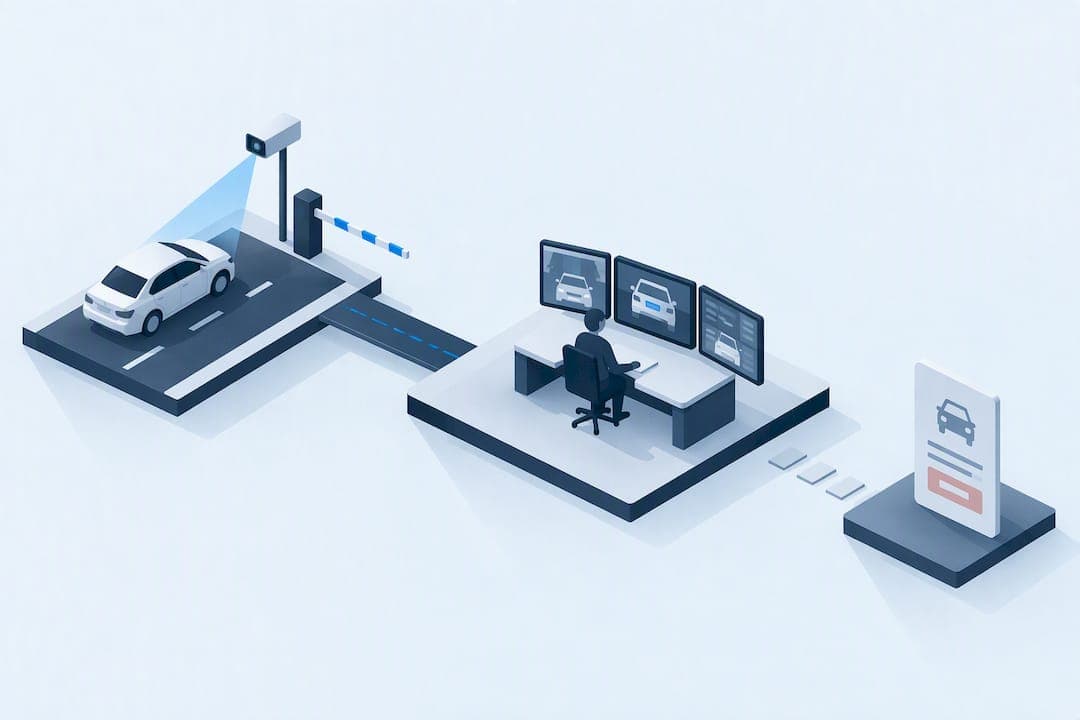
Parking permits are enforced by municipal parking departments and police divisions using visible permit checks and license-plate verification. Officers patrol permit zones during posted hours, scan plates against digital permit records, and issue citations when a match fails. If you believe a ticket is wrong, photograph the scene, save your permit confirmation, and use the city's reporting or appeal channel right away.
TL;DR:
- Digital permits can take time to sync with handheld devices; wait for confirmation, check every plate character, and save proof of activation.
- Posted signs control enforcement hours, and permit holders may still face street sweeping or other restrictions; holiday exceptions vary by city and block.
- Unpaid citations can gain late fees, while repeated violations may lead to booting or towing; release often requires payment of fines and storage charges.
- Appeal deadlines commonly fall 21 to 30 days after a citation; submit dated photos, permit confirmation, and matching vehicle registration before the deadline.
- Report violations through the city’s 311 line or parking office, but direct private lot disputes to the operator or property manager; safety hazards receive priority.
Table of Contents
- Which agencies actually enforce parking permits
- How enforcement officers verify your permit
- When enforcement actually happens
- How fines escalate and when vehicles get booted or towed
- How to report an illegally parked vehicle
- How to contest a citation before the deadline passes
- Municipal practices that cut down on enforcement errors
- Residential, commercial, and visitor permits don't follow the same rules
- Enforcement technology is moving past plate readers
- How enforcement data connects to payments and violation history
- Private enforcement companies and the limits of their authority
- Enforcement affects trust, not just compliance
- What makes enforcement defensible, not just strict
- How MyParkingMgr keeps your enforcement records defensible
- FAQ
- Sources
Which agencies actually enforce parking permits
Most cities assign permit enforcement to a dedicated parking division, a police traffic unit, or both. Some municipalities also contract with private enforcement officers for specific lots or zones. According to Salinas's parking and citations page, designated city departments or police divisions conduct enforcement, patrolling restricted areas during set hours and checking compliance through physical permits or license-plate scans.
Different teams typically handle different problems:
- Metered parking and time limits often fall to a parking services division.
- Residential permit parking (RPP) zones are usually patrolled on a published schedule.
- Towing, impounds, and vehicle release are handled by a separate operations unit or contracted tow company.
- Ticket disputes go to an adjudication or hearing office, not the officer who wrote the citation.
Knowing which unit covers your situation matters because it determines where you call to report a problem and where you file an appeal. A residential zone violation and a towed vehicle rarely go through the same office.
How enforcement officers verify your permit
Visual permits, stickers and hangtags, are still common, but many cities have shifted to plate-linked digital permits. An officer enters your plate into a handheld device, which checks it against the permit database instead of looking for a sticker on your windshield.
License-plate reader systems add another layer. According to San José's ALPR policy page, automated plate readers flag potential violations but do not replace human review: officers are generally required to manually verify a captured plate against the database before finalizing a citation, which guards against misreads or improperly mounted plates. The Gaithersburg Police Department's LPR policy similarly requires operators to confirm an LPR alert against authorized enforcement systems before acting, and to document that verification in the resulting report.
Digital permits can raise their own friction. A permit may show as active the moment you buy it, but a short delay between the online portal and an officer's handheld device is possible before the record fully syncs.
- Visual permits are checked by sight; digital permits are checked by plate lookup.
- ALPR flags a potential match; a person still verifies it before a ticket is written.
- Sync delays between activation and handheld devices can cause a ticket even when your permit is valid.
Pro Tip: Wait for a confirmation email or text after buying a digital permit, and double-check every character of your plate entry before you park.
When enforcement actually happens
Enforcement hours vary by city and even by block, but a common pattern for RPP and timed zones runs roughly 8:00 a.m. to 7:00 p.m. on weekdays, with some areas adding weekend or seasonal exceptions. Berkeley's published RPP enforcement schedule illustrates how hours and days can differ block by block within the same city.
Holidays and street-sweeping days often suspend regular permit enforcement, but this is not universal, so posted signage and the municipal permit schedule are the final word, not general assumptions.
- Posted signs override general expectations about enforcement hours.
- Street-sweeping restrictions can apply to permit holders too, even during otherwise permit-only hours.
- Holiday exceptions differ by jurisdiction and sometimes by specific street.
Even a valid, active permit doesn't exempt you from other posted restrictions during enforcement hours.
How fines escalate and when vehicles get booted or towed
Parking citations are civil penalties, not criminal charges, and the dollar amounts vary widely by city. Fines of $35 in parts of Salinas and $70 for residential permit violations in Houston show how much the same type of violation can cost depending on jurisdiction.
Unpaid citations tend to escalate in stages:
- An unpaid ticket may accrue late fees after a grace period.
- Multiple unpaid citations can trigger a boot, which immobilizes the vehicle until fines are paid.
- Continued nonpayment can lead to towing, and most municipalities require outstanding fines to be settled before the vehicle is released, on top of towing and storage charges.
Permits themselves can also be revoked. Cities commonly pull a permit for misuse, such as transferring it to an unauthorized vehicle, failure to meet eligibility requirements, or an unresolved balance of citations tied to the account. Replacement and revocation rules differ from program to program, so checking your specific city's permit terms before assuming a permit is permanent is worthwhile.
How to report an illegally parked vehicle
Reporting channels vary by city, but the process generally follows the same steps.
- Call your city's 311 line, a dedicated parking enforcement phone number, or submit an online enforcement request form.
- Note the exact location, including the street address or nearest cross street and block number.
- Record the license plate number and state, along with a basic vehicle description (make, color, body type).
- Note the time you observed the violation and attach photos or video if you have them.
- Submit the report and keep any confirmation number the system provides.
An online or phone report doesn't guarantee an officer shows up right away. Agencies generally prioritize safety hazards, such as vehicles blocking fire hydrants or crosswalks, over routine permit violations, and repeated problem locations tend to get attention faster than one-off complaints.
How to contest a citation before the deadline passes
Parking tickets are civil matters, and most cities use a staged process to contest one. San Diego's citation appeal page describes this as an administrative review, followed by a hearing, and in some cases a further court appeal, each bound by strict timeframes. Those windows commonly run 21 to 30 days from the citation date, and missing one typically forfeits your right to contest that stage. See Houston's parking FAQ for a 30-day deadline and San Diego's appeal page for its deadlines.
Before filing, gather:
- Time-stamped photos of the vehicle, the permit, and any posted signage.
- Your permit purchase or activation confirmation, including the date and time.
- Vehicle registration documents showing the plate matches your account.
- Any witness statement or additional evidence relevant to the dispute.
If the administrative review denies your appeal, a court petition may be the next option, sometimes with a filing fee. Follow your city's written instructions exactly. Appeal rights are procedural, and a missed form or late submission can end the process regardless of how strong your evidence is.
Municipal practices that cut down on enforcement errors
Cities that document their verification steps tend to generate fewer disputed tickets. Manual confirmation of an ALPR match before citation, as described in Gaithersburg's LPR policy, is one example: it adds a human check specifically to catch misreads before a driver is penalized.
Boston's own resident parking permit FAQ acknowledges that a driver can still receive a ticket while waiting for a physical sticker or during a system sync gap, even after approval. The guidance is consistent: keep your permit confirmation, and use it as evidence if a citation follows an approved application. Our overview of avoiding wrong tickets with digital permits covers this same timing gap for property managers configuring permit systems.
Pro Tip: Save your permit confirmation email or screenshot somewhere you can pull it up instantly if an officer or hearing examiner asks for it.
Residential, commercial, and visitor permits don't follow the same rules
Enforcement intensity and the rules behind it differ by permit type, and mixing them up is a common source of avoidable tickets.
Residential permit parking (RPP) typically restricts a block to permit holders during specific hours, with a capped number of permits or visitor passes issued per address. San Diego's residential permit parking page notes that permits must be renewed on schedule and that a vehicle without a valid, displayed or plate-linked permit during enforcement hours gets a citation regardless of residency.
Commercial permits, often tied to loading zones or specific business hours, are usually enforced more narrowly: officers check them mainly during active commercial hours and the permit may not apply outside that window at all.
Visitor permits are the most time-limited and usually the most tightly monitored for abuse, since they're meant for temporary use rather than regular parking. Programs commonly cap how many visitor passes a household can use per month and require accurate plate entry for each guest vehicle. Multi-property operators managing many of these at once benefit from a documented process, which is covered in our guide to visitor parking registration.
The practical takeaway: a residential permit does not cover a commercial loading zone, and a visitor pass issued for one plate won't protect a different vehicle parked in its place.

Enforcement technology is moving past plate readers
ALPR gets most of the attention, but it's one piece of a broader shift toward mobile, connected enforcement tools. Handheld devices now typically combine plate lookup, citation printing, and photo documentation in a single pass, which speeds up patrols and creates a record at the moment of the stop rather than after the fact.
Mobile apps for both enforcement staff and drivers are becoming more common. On the enforcement side, officers can receive real-time alerts about reported violations, flagged vehicles, or priority complaint locations instead of relying solely on a fixed patrol route. On the driver side, some cities and private operators now offer apps that confirm permit status, send renewal reminders, or notify a driver when enforcement has been logged against their vehicle.
Real-time alerting also supports faster response to active problems, such as a vehicle blocking a fire lane, by routing the nearest available officer rather than waiting for the next scheduled sweep. None of this replaces the verification step. A flagged plate or an app alert still needs a human check before a citation is finalized, which keeps the same accuracy safeguard that applies to standard ALPR hits.
How enforcement data connects to payments and violation history
Modern enforcement systems increasingly tie citation data to payment processing and a vehicle's violation history in one record. When an officer issues a ticket, that citation typically lands in the same system a driver uses to pay it online, and repeat violations on the same plate or address become visible to enforcement staff reviewing the account.
This integration matters at the moment fines escalate. A city or operator checking whether a vehicle qualifies for booting or towing is usually looking at an accumulated violation history rather than a single ticket, and unpaid balances across multiple citations can be flagged automatically rather than tracked by hand.
For permit holders, this also means a dispute or a payment on one citation can show up quickly in a record a future officer might check, reducing the chance of a resolved issue causing a repeat citation. For readers managing enforcement on the operator side, the practical goal is the same: a consolidated record for each vehicle, not a scattered set of files.
Private enforcement companies and the limits of their authority
Private parking enforcement is common on commercial lots, apartment communities, and some gated or HOA properties, but the legal authority behind it is narrower than a police officer's. A private company can issue a citation under property owner authorization, flag a vehicle for towing under a contract with the property, or monitor compliance with lot rules. What a private officer generally cannot do is enforce public street parking laws or exercise police powers like arrest.
That distinction matters for where a dispute goes. A citation from a private lot operator is typically contested through that company or the property manager, not through a municipal hearing office, while a citation from a city parking division follows the municipal appeal process described earlier. Mixing up the two wastes time: filing a private lot dispute with a city office, or vice versa, usually just delays resolution.
Property managers and HOAs relying on private enforcement benefit from clear, documented authorization and consistent evidence standards, since a dispute that ends up in small claims court or a tenant complaint depends on the same kind of proof a municipal hearing would want: timestamps, photos, and a clear record of the rule that was broken. Our guide to making private parking enforcement defensible walks through the documentation that holds up when a resident or guest pushes back.

Enforcement affects trust, not just compliance
Aggressive or inconsistent enforcement erodes trust faster than it improves compliance. Residents and tenants who get ticketed despite a valid permit, or who see enforcement applied unevenly between neighbors, tend to escalate complaints to management or the city rather than simply paying the fine and moving on.
Clear communication reduces that friction before it starts. Posting enforcement hours and permit rules where residents actually see them, sending renewal reminders before a permit lapses, and giving a straightforward way to question a citation all cut down on disputes that would otherwise land as angry calls or public complaints. Cities that publish plain-language FAQs, like Boston's resident permit FAQ, make it easier for permit holders to self-resolve confusion instead of contesting a citation that was actually valid.
The practical pattern: consistent rules, visible communication, and a fast way to flag an error build more goodwill than strict enforcement alone, and they cut down on the volume of appeals that enforcement staff have to process.
What makes enforcement defensible, not just strict
Enforcement holds up under scrutiny when the record behind it does. A citation backed by a verified plate match, a timestamped photo, and a permit status pulled from one consistent system is far harder to successfully dispute than one based on a quick visual check alone.
That's the real argument for unified, auditable records: they protect the driver who did nothing wrong and the officer or property who issued a legitimate citation. Manual verification after an ALPR hit, documented photo evidence, and permit records that stay current aren't bureaucratic overhead. They're what keeps an appeal process short instead of contentious.
— MyParkingMgr
How MyParkingMgr keeps your enforcement records defensible
Disputes drag on when permit, plate, and violation data are scattered across systems and nobody can produce a clear record fast. We built our platform around a single, auditable history per vehicle, so a property manager or parking operator can pull up permit status, citation history, and payment records in one place instead of chasing down spreadsheets.
- Our platform supports permits and enforcement activities as part of a unified parking management system.
- Our parking enforcement software supports enforcement activities and violation tracking.
- Centralized violation management and payments support a unified record system for parking operations.
If you manage permits, violations, or towing across one property or a whole portfolio, we offer free onboarding to help you see whether a unified system fits your operation.
FAQ
Is parking enforcement the police?
Not always. Many cities use a dedicated municipal parking division separate from the police department, though police traffic units handle enforcement in some jurisdictions, and some cities contract with private enforcement companies for specific lots or zones.
How can I report illegal parking?
Most cities offer a 311 line, a dedicated parking enforcement phone number, or an online reporting form where you submit the location, plate number, and a description of the vehicle. Photos or video help, though submitting a report doesn't guarantee immediate response, since agencies tend to prioritize safety hazards first.
What happens if I don't pay a parking citation?
Unpaid citations typically accrue late fees, and continued nonpayment can lead to a boot, towing, or a hold on vehicle registration renewal depending on the city. Most municipalities require outstanding fines to be paid before a booted or towed vehicle is released.
How do I report an illegally parked vehicle in my city?
Check your city's official parking or 311 page for a reporting form or dedicated phone line, since the exact channel and required details vary by jurisdiction. Have the plate number, location, and a photo ready before you report it.
How long do I have to appeal a parking ticket?
Appeal windows vary by city, but a common range runs about 21 to 30 days from the citation date, as described in San Diego's citation appeal process and Houston's parking FAQ. Missing that window typically forfeits your right to contest the ticket at that stage.
Sources
- Salinas
- Automated License Plate Reader (ALPR) Parking Compliance Cameras | City of San José
- GAITHERSBURG POLICE DEPARTMENT
- Resident Parking Permit FAQs | Boston.gov
- Appeal a Parking Citation/Ticket | City of San Diego Official Website