
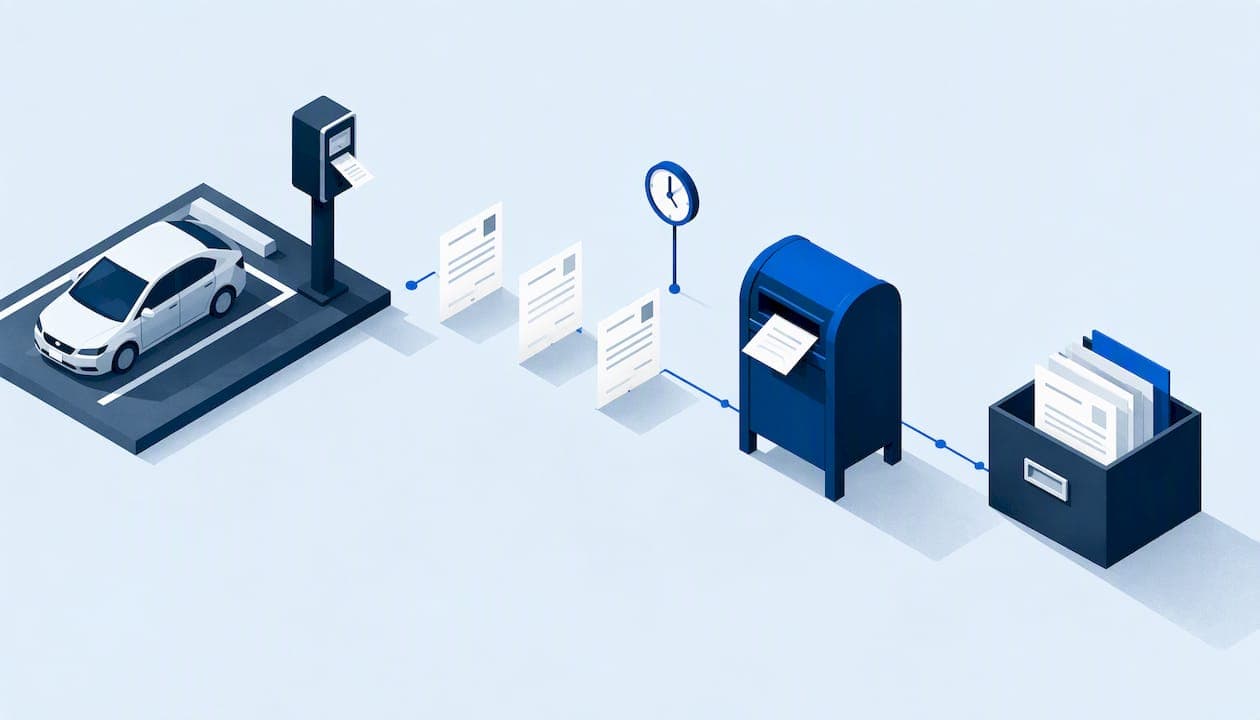
Most parking citations can be contested, usually through an administrative review, then a hearing, and sometimes a court appeal. Act now: keep the ticket, take date-stamped photos of the scene, write down where and when you parked, and find your local filing deadline. If your window is nearly closed, file the review or hearing request immediately and preserve your evidence.
TL;DR:
- Many cities require review before hearings and court appeals; San Diego allows 21 days after citation or 14 days after a delinquent notice.
- Use the issuing agency’s official channel, because contacting a general city office does not pause deadlines; pay any required deposit and keep submission confirmation.
- Hearing officers rely on verifiable context: include wide shots showing street names and signs, closeups of your vehicle, and a labeled evidence summary.
- In New York City, request a hearing within 30 days; otherwise, default judgment may follow in roughly 75 to 100 days, with penalties or towing.
- After a New York City hearing loss, appeal within 30 calendar days and identify legal or factual errors; paying first can head off added penalties.
Table of Contents
- How the three-level appeals process works
- How to file your appeal: online, by mail, in person, or by phone
- What evidence helps your appeal succeed
- Deadlines, deposits, and what happens if you do nothing
- What to do after a hearing decision
- Printable checklist and sample timeline
- Why clear records settle most parking disputes
- FAQ
- Sources
How the three-level appeals process works
Many cities follow the same sequence, and the order matters because you generally have to finish one level before moving to the next. San Diego is a good example of a three-level process: administrative review, administrative hearing, and a Superior Court appeal. Its administrative review requests are due within 21 calendar days of the citation or 14 days after a delinquent notice is mailed.
Administrative review is a paper check. A reviewer looks at the ticket and your explanation, and can dismiss it if the citation was flawed or your reason holds up.
The administrative hearing is your chance to present evidence to a hearing officer. Some places require a deposit first, and the format may be in person, online or by mail. In some jurisdictions, appearing in person does not improve your odds, because the decision rests on the evidence you submit.
A court appeal comes last, after the administrative stages. Where it exists, the filing fee can be around $25, and it is commonly refunded if the judge rules for you. A court decision is typically final.

How to file your appeal: online, by mail, in person, or by phone
Agencies may accept different routes, such as an online portal, a hearing-by-mail packet, an in-person hearing request, or a phone call to schedule. Choose the fastest one your jurisdiction accepts, and use the adjudication office's official channels. Contacting a general city office does not pause your deadline.
- Find the official appeals page for the agency that issued the ticket and download the current form or open the portal.
- Enter the citation number, license plate and state exactly as printed on the ticket.
- Write a short, factual statement of your dispute: what happened, where, and when.
- If the ticket has wrong details, attach a separate page listing each error. A written statement of specific errors, such as the plate, sign legibility or location, works better than a short online field.
- Add your phone number, email and mailing address, plus copies of your evidence (never originals).
- Request accommodations if you need them, such as ADA support, language assistance or a remote hearing.
- Submit, then save the confirmation number, a screenshot or your certified mail receipt.
If you mail it, send it early enough to arrive before the deadline, and keep a full copy of everything.
What evidence helps your appeal succeed
Hearing officers decide on what they can see and verify. Think context, not close-ups alone.
- Wide shots of the whole block, including street names and building addresses; front and back of every relevant sign should be readable
- Your vehicle in context, plus a close-up of the license plate or permit on the dashboard
- Photos of anything obstructing a sign, such as a tree, scaffolding or faded paint
- Permits, placards, receipts, and any tow or boot notices
- Work orders or construction notices, and witness contact details if someone saw what happened
Add a one-page evidence summary at the front. List each file by name, the citation number, the date and time, and a brief chronology of events. This lets the reviewer verify your story more easily rather than hunting through attachments.
Pro Tip: Name files in order, such as "Citation123_01_wide-block.jpg," so your summary page and attachments match exactly.

If you park on managed private property, proof of permission matters most. Our post on digital parking permits explains how a stored permit record can settle a wrong ticket quickly.
Deadlines, deposits, and what happens if you do nothing
Deadlines are the part that trips people up. In New York City, you must request a hearing within 30 days to avoid late penalties, and a ticket commonly goes into judgment in about 100 days. After a year it may no longer be hearable.
Deposit rules vary. Some places require the full fine or an approved waiver before a hearing, and refund it if you win.
Tickets can go into default judgment roughly 75–100 days after issuance if you neither pay nor request a hearing, which opens the door to added penalties and possible booting or towing.
Once a ticket is in judgment, or very old, your appeal rights shrink fast. Treat the first notice as a countdown.
What to do after a hearing decision
If you lose, you still have options, and each has trade-offs.
Appeal the decision. In New York City you have 30 calendar days from the hearing decision to mail a formal appeal. Pros: a second look and a chance to correct errors. Cons: the clock keeps running, and penalties may grow if you lose.
Pay, then appeal. Paying first can head off a boot, tow or added penalties, and you can request a refund if you later win. The downside is that you are out the money in the meantime.
Accept the decision. This ends the matter fastest and protects your record, but you give up any refund.
An appellate review usually asks whether the hearing officer made a legal or factual error, so documented evidence beats a verbal re-argument. Identify exactly what the hearing officer got wrong, and follow your city's instructions to the letter.
Printable checklist and sample timeline
Copy this and adjust the dates to your jurisdiction.
- Hours 0–48: Keep the citation and scan it. Photograph the scene, note witnesses, and back up your files.
- Days 3–21: Request the administrative review or hearing, pay any required deposit, and submit labeled evidence with your summary page.
- Days 21–30: Confirm receipt, check your status, and respond to any request for more information.
- After a loss: Note your appeal window, commonly 30 days, then decide between appealing and pay-then-appeal.
Keep these on hand:
- The original ticket and every submission
- Confirmation numbers and mailing receipts
- All correspondence, since a later appeal typically requires showing an error in the earlier decision
- Refund paperwork if you paid first
Why clear records settle most parking disputes
We build tools for property operators, so we see both sides of a dispute. When violations are logged with timestamps, permit status and photos in one place, questions can be answered more efficiently. The same principle helps you: a labeled, contextual evidence packet beats a single cropped photo almost every time. Our guide on making private parking enforcement defensible shows what well-kept records look like from the operator's side.
— MyParkingMgr
FAQ
What's a good excuse to appeal a parking ticket?
A good reason is a verifiable fact, not an excuse. Examples include a missing or unreadable sign, a wrong plate or location on the ticket, a valid permit, or a receipt showing you paid. Back it with photos and documents.
Is it worth appealing a parking ticket?
Often yes, especially when you have clear evidence or the ticket has errors. Because decisions focus on submitted evidence, a well-prepared online or mail appeal costs little time. Weigh the fine against any deposit required.
What's the worst that can happen if you don't pay a parking ticket?
Late penalties accumulate, and the ticket can go into default judgment, with roughly 75–100 days cited in New York City. After that, booting or towing becomes possible and your appeal options narrow.
How do you win an appeal for a parking ticket?
Meet the deadline, file through the official channel, and submit organized evidence with a short summary. Point to specific facts, such as an obscured sign or a valid permit, rather than general complaints.
Sources
- Appeal a Parking Citation/Ticket | City of San Diego Official Website
- Contest a Parking Ticket | City of Berkeley
- Dispute a Ticket - NYC.gov/Finance