
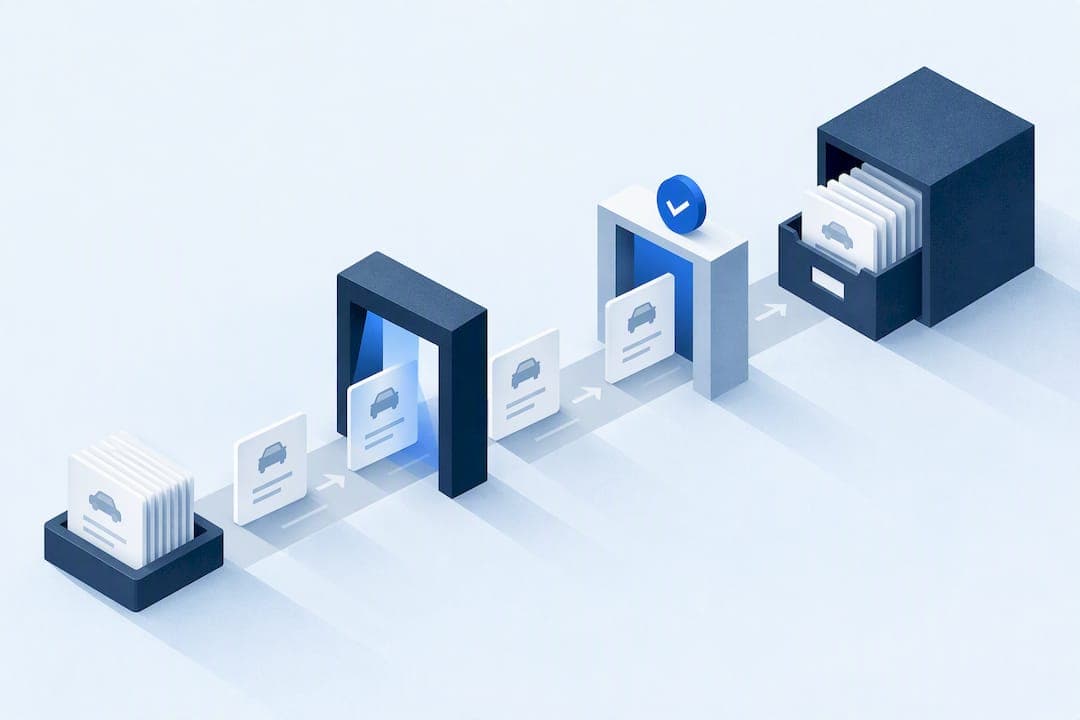
A successful permit renewal season means verifying eligibility, collecting documentation, processing payments, and updating records before permits expire. Start now by checking proof-of-residency files, confirming vehicle registrations, notifying permit holders of upcoming deadlines, and clearing unpaid citations, since outstanding fines are a common renewal blocker. A platform like MyParkingMgr can keep these steps linked to one record instead of scattered across spreadsheets and email threads.
TL;DR:
- Reconcile unpaid citations before opening renewals, since programs such as Cambridge’s block issuance when balances remain outstanding, leaving applicants unable to complete the process.
- Send the first renewal notice about four weeks before expiry, then follow up at two weeks and one week for residents who have not responded.
- Resident renewals typically require a driver’s license, a lease or deed, a recent utility bill, and registration matching the plate on file.
- Guest permits can last from 24 hours to 30 days, but some programs bar consecutive 30 day permits for the same vehicle.
- For portfolios spanning jurisdictions, start internal verification about two weeks before the earliest local deadline and send final reminders one week beforehand.
Table of Contents
- How does the permit renewal workflow actually run?
- What documents and eligibility rules apply to each permit type?
- When should your renewal calendar actually start?
- Which portal features actually reduce renewal friction?
- What should your renewal checklist look like?
- Why renewal season is really an audit opportunity
- How MyParkingMgr supports renewal season at scale
- FAQ
- Sources
How does the permit renewal workflow actually run?
Renewal season runs smoothly when you treat it as a sequence rather than a single deadline. Each stage builds on the last, and skipping the prep work almost always shows up as a bottleneck three weeks later.
- Audit your records. Pull every active permit, vehicle plate, and contact email, and flag mismatches before you send a single notice.
- Reconcile outstanding citations. Many municipal programs, including Cambridge's permit system, will not issue or renew a permit when the applicant has unpaid parking tickets, so resolve balances before opening the renewal window.
- Send staged notices. Most portals issue the first renewal reminder about four weeks before expiry, as Portland's annual zone permit program does, followed by a two-week and a one-week follow-up for anyone who has not responded.
- Verify documentation. Confirm updated proof of residency, current vehicle registration, and any plate changes against what is already on file rather than starting a fresh application for returning residents.
- Collect payment. Offer online payment as the default, with in-person or mail options for residents who need them, and prorate fees when a permit term starts mid-cycle.
- Issue the permit. Activate the physical or virtual permit, send a confirmation, and log the issuance date.
- Archive the record. Store the receipt, verification documents, and communication history together so you have a defensible audit trail if a dispute comes up later.
Pro Tip: Run your citation reconciliation before you send the first renewal notice, not after, so residents see a clean balance the moment they log in.
What documents and eligibility rules apply to each permit type?
Verification standards differ by permit type, and treating them the same way creates both compliance gaps and resident frustration.
- Resident permits typically require a driver's license, lease or deed, a recent utility bill, and current vehicle registration that matches the plate on file.
- Guest permits usually carry duration caps ranging from 24 hours to 30 days, and programs like the one described by the City of Alexandria treat consecutive 30-day visitor permits as non-renewable for the same vehicle.
- Vendor and contractor permits generally require business credentials or a service agreement, with frequency limits that prevent a single vendor from holding a permanent pass.
- Plate changes should trigger a documentation update rather than an entirely new application, and replacement permits for lost cards are usually capped at a small number per term.
Guest permit limits exist to protect inventory for residents, and guidance from university parking programs reflects the same logic municipal programs apply at scale.
When should your renewal calendar actually start?
Municipal cycles vary widely, and a portfolio with properties in different jurisdictions needs an internal calendar that maps every local deadline to a single operational timeline.
| Program example | Permit cycle | Renewal window or notice timing |
|---|---|---|
| Berkeley resident permits | July 1 to June 30 | Notice mailed by May 1, renew before June 30 |
| Portland annual zone permits | Annual | Notice sent approximately one month before expiry |
| Georgia Tech permits | Annual, activation delayed | Portal open April 1, valid from August 15 |
Internally, lock your verification window about two weeks before the earliest municipal deadline on your portfolio, send final reminders one week out, and build in a buffer for staggered property cycles so one building's deadline does not get lost while you are focused on another.
Which portal features actually reduce renewal friction?
The systems you use matter as much as the process itself. A few features consistently separate smooth renewal seasons from chaotic ones.
- Account-based renewals that link a resident's login to their vehicle record, so returning residents update rather than reapply.
- Multi-channel notifications by email and text, following the same four-week cadence used by Portland's program.
- Digital, plate-based permits with opt-in auto-renew, a model Corvallis adopted alongside Oregon State University to cut manual renewal steps.
- Violation data tied to the renewal record, so an unpaid citation surfaces automatically instead of being discovered after a permit is issued.
- Audit trails and receipts that document who verified what, and when, so an enforcement decision or a resident dispute has a paper trail behind it.
A comprehensive parking management platform keeps permit records, vehicle history, violations, and payments in one system rather than split across a parking app, a spreadsheet, and an email inbox, which is the gap most fragmented renewal workflows run into. For a closer look at how digital permits reduce errors during issuance, see our piece on avoiding wrong tickets with digital permits.
Pro Tip: If your current system can't flag an unpaid citation automatically during renewal, that single gap is usually where most renewal disputes start.
What should your renewal checklist look like?
A written checklist keeps renewal season consistent even when different staff members handle different properties.
- Pre-season: clean up contact and vehicle data, reconcile outstanding citations, confirm payment processing is active, and set your notification schedule.
- During season: verify documents in batches, process payments as they arrive, issue virtual or physical permits, and log any replacement requests separately.
- Post-season: archive verification records and receipts, reconcile payments against issued permits, and note any process issues for next cycle.
| Phase | Primary task | Owner action |
|---|---|---|
| Pre-season | Data cleanup and citation reconciliation | Flag mismatches before notices go out |
| During season | Verification and payment processing | Confirm documents, collect fees, issue permits |
| Post-season | Recordkeeping | Archive receipts and audit notes |
For more on building defensible audit records from this kind of documentation, our guide on reports that defend your parking permit policy walks through what to keep and why.
Why renewal season is really an audit opportunity

Every renewal cycle is a chance to confirm who actually belongs in your parking inventory, not just a paperwork exercise. Treating it that way protects both revenue and fairness: a resident who never updates their vehicle registration is also the resident most likely to dispute an enforcement action later.
Proactive, staged communication does more than reduce no-shows. It gives residents a clear reason to comply, which cuts down on the appeals and complaints that eat up staff time during the busiest weeks of the cycle. For examples of how clear verification supports defensible enforcement, see our steps for making private parking enforcement defensible.
— MyParkingMgr
How MyParkingMgr supports renewal season at scale
Running renewals across multiple properties gets easier when notifications, vehicle records, violation history, and payments live in one place instead of four. We built MyParkingMgr around that idea: a single record per vehicle that carries through permit issuance, enforcement, and billing, so your team isn't cross-checking three systems before approving a renewal.
What that looks like in practice:
- Automated, multi-channel renewal notices tied to each property's actual deadline.
- Vehicle records linked to permit history, so plate changes and replacements update one file instead of creating a new one.
- Violation data that surfaces automatically during renewal review, before a permit gets reissued.
- Audit trails and payment receipts stored together, ready if a decision gets questioned later.
We support hosted SaaS, client-hosted, and white-label deployment, so the setup fits how your portfolio already operates. If you manage resident, guest, or vendor permits across more than one property, start with free onboarding or look through our platform features to see how renewal workflows fit into the rest of your operation.
FAQ
What triggers a permit renewal notice before expiry?
Most portal-based programs send the first renewal notice about four weeks before a permit expires, often by email or text, as seen in Portland's annual zone permit program. A second and third reminder typically follow at two weeks and one week out for residents who haven't responded.
Can unpaid citations block a permit renewal?
Yes. Programs like the one run by the City of Cambridge will not issue or renew a permit if the applicant has unpaid parking tickets on file. Clearing citation balances before the renewal window opens prevents this from holding up the process.
How long can a guest permit last before it needs renewal?
Guest permits commonly range from 24-hour passes up to 30-day temporary permits, with programs like the one at the University of South Florida enforcing caps to protect resident inventory. Many programs, including the City of Alexandria's, treat long-term guest permits as non-renewable for the same vehicle.
What documents do residents need for permit renewal?
Typical requirements include a driver's license, a lease or deed, a recent utility bill, and current vehicle registration that matches the plate on record. Vendor and contractor permits instead require business credentials and often carry frequency limits rather than open-ended renewal.
Sources
- Resident parking permits | City of Berkeley
- Apply for / Renew a Parking Permit | City of Cambridge, MA
- Portland
- Permit renewals and general permit sales 2026 | Georgia Tech Parking and Transportation
- New city of Corvallis app will streamline parking permits for residents near OSU campus | OSU Today