
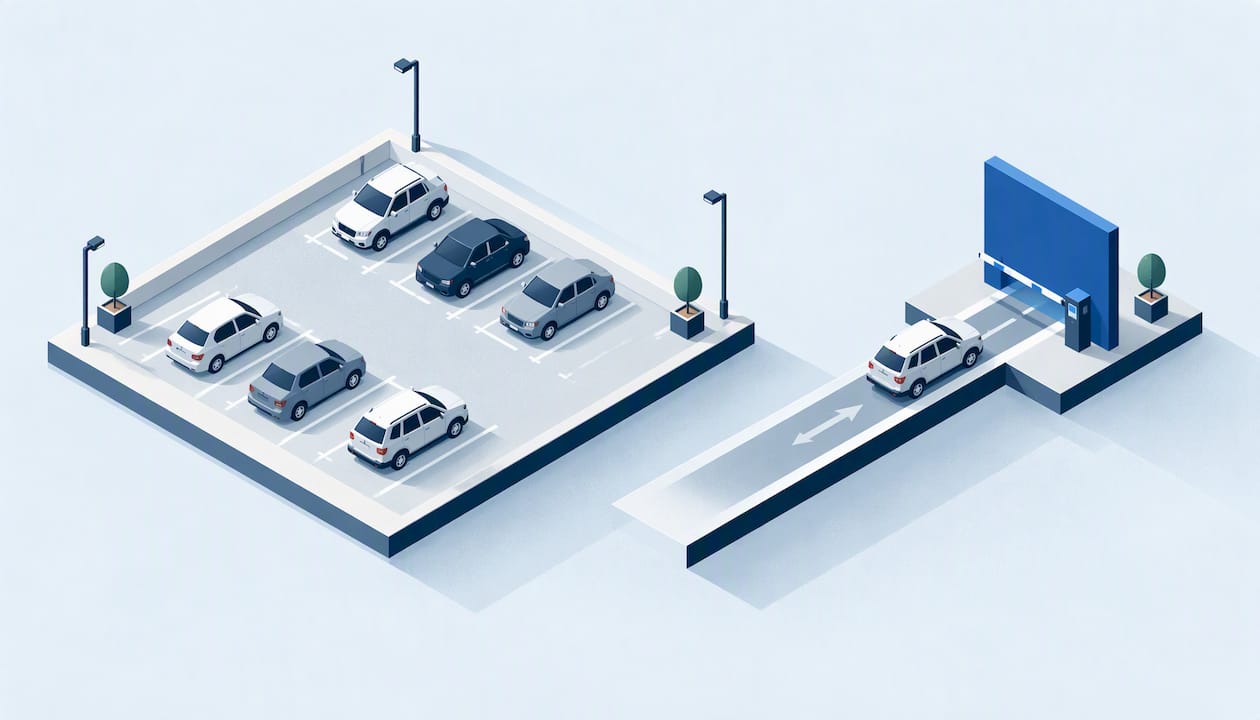
A parking watchlist is a short, managed list of vehicles that your staff or software should flag when they show up on a property. It covers repeat violators, vehicles tied to unpaid fines, banned vehicles and permit abuse cases. A good one is narrow, written down, reviewed by a person and easy to audit. A bad one turns into a grudge list that a tow operator works from. That is where the legal and reputational trouble starts.
This guide is for property managers, HOA boards, hotel operators and parking lot operators. It covers who belongs on a watchlist, what to record, how license plate recognition changes the picture, and how to avoid the mistakes that produce wrongful tows.
TL;DR
- A watchlist should hold vehicles with a documented reason, a defined action and an end date or review date. It should not hold "vehicles we dislike."
- Alerts are a prompt, not a verdict. A person should confirm each match before a ticket or tow.
- Courts have ruled against tows made without adequate notice, so every watchlist entry should link to written warnings, signage and a record of who authorized what.
- Separate true hot-list data (stolen or banned vehicles) from routine parking data, and purge the routine data on a schedule.
- Keep one vehicle history across all properties so a flag means the same thing everywhere.
Table of Contents
- What a parking watchlist actually is
- Who belongs on the list, and who does not
- Why notice and records matter more than the list
- License plate recognition and watchlists
- Building the list step by step
- Special cases by property type
- Our perspective
- How MyParkingMgr supports a defensible watchlist
- Mistakes to avoid
- FAQ
- Sources
What a parking watchlist actually is
The phrase means different things depending on who uses it. Police and city agencies keep "hot lists" of stolen vehicles or wanted plates. A private property does something simpler: it keeps its own list of plates that need attention when they appear.
On a residential, hotel or commercial lot, the entries usually fall into four groups:
- Repeat violators. Vehicles with several documented violations in a set window.
- Unpaid balances. Vehicles tied to fines or fees that remain open after the notice period.
- Banned vehicles. Vehicles barred from the property after a serious incident, with the decision made and recorded by an authorized manager.
- Permit concerns. Plates connected to suspected permit sharing, duplicated passes or expired credentials still in use.
The fourth group is where a lot of day-to-day work happens. If you are seeing the same pass used by different vehicles, our piece on four checks for permit fraud covers what to verify before anything goes on a list.
Watchlist versus routine parking data
Automated license plate recognition (ALPR) can read every plate that passes a camera. Only a small share of those reads should ever matter. Operational guidance such as the City of Sacramento's ALPR policy shows how a public agency draws that line: alert-worthy data is handled differently from everything else. For private properties, the practical rule is the same. Keep the list small, and do not let the cameras turn into a general tracking tool.
Who belongs on the list, and who does not
Write entry criteria before you add the first plate. Here is a starting framework you can adapt with your attorney.
| Entry type | Typical trigger | Action when spotted | Review point |
|---|---|---|---|
| Repeat violator | Set number of documented violations in a stated period | Escalate per policy (warning, fine, then tow if allowed) | Clear after a clean period |
| Open balance | Fine unpaid after notice deadline | Hold on permit renewal or guest registration | Clear on payment |
| Banned vehicle | Written decision by an authorized manager | Notify manager, no automatic tow | Fixed review date |
| Permit concern | Pass seen on a mismatched vehicle | Verify, contact holder, document | Close once resolved |
Two habits keep this honest. Every entry has a written reason and a named person who approved it. Every entry has an exit, because a list with no way off it fills up with stale cases.
Things that should never be a reason to list a vehicle: a complaint from one neighbor with no documentation, the vehicle belonging to someone in a dispute with management, or the make and model alone.
Why notice and records matter more than the list
The weak point of most watchlists is not the list. It is what happens when someone gets towed and challenges it.
Signs come first
On private property, towing rules are usually set by state and local law, and they vary a lot. California is a common reference point. FindHOALaw's summary of California Vehicle Code § 22658 describes signage at entrances, often at least 17 by 22 inches, that prohibits public parking, says vehicles will be removed at the owner's expense and gives the phone number of the local traffic law enforcement agency and the towing company. Your state may differ, so check your own statute. If you want a walkthrough of signage, authorization and what to keep on file, see our guide on U.S. towing signage, authorization and records.
Notice has to reach the owner
Due process is not only a public-sector concern. In a January 2025 opinion, the Ninth Circuit affirmed that a notice must be reasonably calculated to inform the owner of an impending tow and that a citation with no express tow warning generally falls short. That case involved a city, not a private lot, but it shows how courts think about the problem. Separately, a California appeals court in a 2023 San Francisco case examined towing of lawfully parked vehicles without a warrant based on unpaid tickets.
The practical lesson for a private manager: a watchlist flag should never be the only thing standing between a vehicle and a tow. Each entry should connect to dated warnings, photos, the signage in place at the time and a record of who approved the action.
Keep the tow company out of the list
The Colorado Attorney General's office has described the risks of towing arrangements that pay operators per vehicle removed in a 2023 press release. If the person who decides who is on the list also profits from each tow, the list stops being a management tool. Practical safeguards, drawn from HOAleader's advice to boards:
- Require secondary authorization from an onsite manager or designated person before any vehicle is towed.
- Prohibit pass-through fees such as call-out charges billed to the property.
- Require the towing company to indemnify the association for improper tows, since the association often carries the liability.
That article dates from 2010, so treat it as practical advice and check current law with counsel. For a broader process, our guide on making private parking enforcement defensible walks through five steps.
License plate recognition and watchlists
Cameras make a watchlist faster. They also make mistakes faster. A misread character or a plate from the wrong state can turn a clean vehicle into a match.
The Congressional Research Service overview of ALPR, updated in July 2025, describes how these camera systems capture plate data along with related information, and covers the legal questions they raise. For a property manager, three habits matter.
Review every alert
Treat a camera match as a lead. Someone should compare the image to the plate on file, check the state, and look at the permit and violation history before acting. We cover that process in why ALPR alerts need human review, and the policy side in our piece on policy and verification for LPR enforcement.
Limit what you keep
Privacy risk is part of operating the system. NIST's bulletin on its Risk Management Framework treats security and privacy as one discipline, to be managed across the life of a system rather than added at the end. The FTC's January 2025 action against General Motors and OnStar over sharing precise location data without consent shows how seriously regulators treat vehicle location information. A parking operator is not GM, but the principle carries over: collect only what you need, use it only for enforcement, and restrict who can see it.
On retention, the Sacramento policy is a useful public example of written retention and access rules. A common practice among privacy-minded operators is to purge non-enforcement reads within a short window, often 30 to 90 days. Pick a period with your counsel, write it down and automate the purge.

Keep hot-list data separate
Banned and stolen vehicle matches need a different workflow from a guest who overstayed. The first may call for a manager or the police. The second calls for a warning. If both land in the same queue with the same urgency, staff will treat them the same way.
Building the list step by step
- Write the policy. Define each list type, who can add to it, who approves, and how entries expire.
- Tie entries to evidence. Violation records, photos, notices sent and payment status attach to each plate.
- Post compliant signage. Check state and local requirements, and keep dated photos of the signs.
- Set the response ladder. Warning, then fine, then tow where permitted, with a person authorizing each step.
- Review alerts before action. Verify the plate, state and permit status.
- Audit monthly. Look at who added what, which entries have expired and which actions followed from flags.
- Purge on schedule. Delete routine reads and expired entries according to your written retention period.
For reporting that proves the policy is applied consistently, see our guide to four reports that defend your permit policy.
Special cases by property type
HOAs and residential communities
Residents tend to accept enforcement when rules are clear and applied evenly. Guest pass limits and towing rules belong in the governing documents and in a plain-language summary. Our guides on HOA parking management and HOA parking rules for homeowners cover that ground. Watch for a list that targets only certain residents, because uneven enforcement is how disputes become lawsuits.
Hotels
Guests are transient, so a watchlist here leans on registration data: a vehicle that overstays, parks in a restricted zone or was banned after an incident. Registering every guest vehicle at check-in makes the difference between a flag and a guess. Our guest parking management page describes how that registration works.
Multi-property portfolios
If a vehicle is banned at one site, should it be banned at the others? That is a policy decision, not a software default. Decide it in writing, and make sure the sharing is disclosed in your rules. For a portfolio, the value is a single vehicle history so that staff at property B can see what happened at property A when policy allows it. Our approach to visitor registration across multiple properties shows one way to set that up.
Our perspective
We build parking management software for multi-property operators, and the pattern we see is consistent: watchlists go wrong when the data lives in several places. A spreadsheet of banned plates, a separate permit database, a towing company's own log and a stack of emailed complaints do not add up to a defensible record.

We believe the vehicle record should be the center. Violations, permits, guest registrations, payments and towing activity should all attach to the same plate history, so a watchlist entry can be traced to its evidence. Role-based access should decide who can add an entry, who can approve a tow and who can only view. And the audit trail should show every one of those actions.
We also believe in leaving the final decision with a person. Technology can surface a match in seconds, but a manager who understands the property should confirm it. That is why we put effort into customizable workflows: the right escalation ladder for a luxury hotel is not the right one for a 400-unit community, and software should bend to the policy rather than the other way around.
— MyParkingMgr
How MyParkingMgr supports a defensible watchlist
MyParkingMgr is a unified platform for guest access, permits, violations, payments and towing, with audit capabilities and workflows you can configure to your own policy. It runs as hosted SaaS, client-hosted or white-label, and it supports hardware integration for enforcement activities. You can see how the pieces fit on the features page, or read about parking violation management and parking enforcement software. Onboarding is free (0 USD, one-off). If you want to talk through your own lists and workflows, contact us.
Mistakes to avoid
- Listing without evidence. If you cannot show why a plate is on the list, remove it.
- No expiry. Stale entries cause wrong tickets and wrong tows.
- Auto-tow on a match. A match should trigger review, not removal.
- Letting the tow operator manage the list. Keep enforcement decisions with the property.
- Holding all plate reads forever. Retention without purpose is liability.
- Treating signage as a one-time job. Signs fade, get removed and fall out of compliance. Photograph them regularly.
FAQ
Is it legal for a private property to keep a vehicle watchlist?
Generally, keeping a list of vehicles tied to documented violations or bans is an ordinary management practice. The legal risk is in how you gather the data and what you do with a match, particularly towing, which is governed by state and local law. Ask a local attorney to review your policy before you roll it out.
How long should we keep watchlist and plate data?
There is no single national rule for private operators. Public policies and privacy-minded practice point toward short retention for routine reads, often 30 to 90 days, and keeping enforcement records only as long as they serve a purpose. Set a written schedule with your counsel and automate deletion.
Can a watchlist hit be the basis for a tow?
It should not be the only basis. Courts have looked closely at notice and authorization in tow cases, so you want dated warnings, compliant signage and a named person approving the tow. Treat the flag as the start of a review.
What is the difference between a hot list and a watchlist?
In ALPR language, a hot list usually means stolen or wanted vehicles, often supplied by law enforcement. A property watchlist is your own list of vehicles you want flagged for parking-policy reasons. Keep them in separate workflows with different responses.
Sources
- FindHOALaw: Towing of Vehicles
- Ninth Circuit opinion on vehicle tow notice and due process (2025)
- Coalition on Homelessness v. City and County of San Francisco (2023)
- Colorado Attorney General press release (2023)
- HOAleader: HOAs and Parking
- City of Sacramento: Automated License Plate Recognition Policy
- Congress.gov: Automated License Plate Readers, Background and Legal Issues
- NIST ITL Bulletin: Risk Management Framework
- FTC: Action against General Motors over location data (2025)